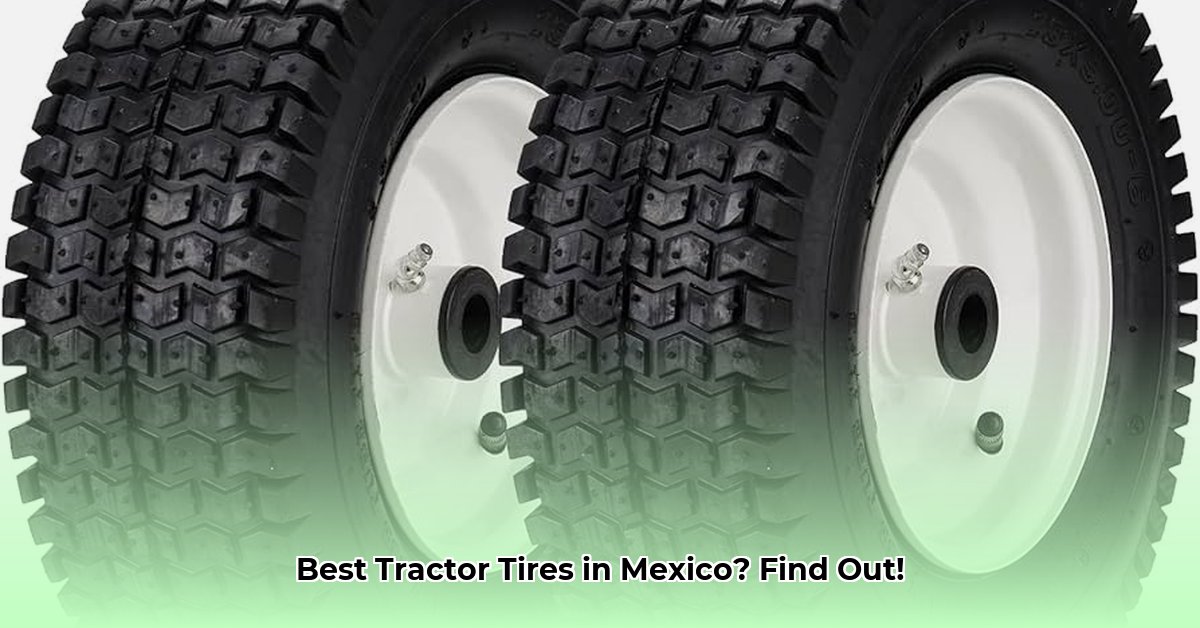
Llantas de Tractor: Optimizing Your Mexican Farm's Performance
Choosing the right tractor tires (llantas de tractor) is crucial for Mexican farmers. Tire selection directly impacts fuel efficiency, soil health, and ultimately, profitability. This article provides a comprehensive analysis of the Mexican tractor tire market, focusing on key brands, popular sizes, and actionable insights for farmers, distributors, and manufacturers. For more on water-filled tires, see this helpful resource: water-filled tires.
Understanding Your Farming Requirements: Matching Tires to Terrain
Before considering specific brands and sizes, assess your farm's unique needs. Soil type, crops cultivated, and tractor model all influence the ideal tire characteristics. Think of it like choosing work boots—you need the right type for the job.
- Soil Composition: Sandy soil requires tires that minimize slippage, while clay soil benefits from deep treads for better grip. Rocky terrain demands robust, puncture-resistant tires.
- Crop Types: Heavy crops (e.g., sugarcane) require high load-bearing capacity tires, whereas smaller crops permit smaller, more maneuverable options. Consider the weight of harvesting equipment.
- Tractor Model and Specifications: Always consult your tractor's manual for recommended tire sizes and load capacities. Incorrect tires can cause damage and compromise safety.
- Budget: Tractor tires vary significantly in price. Prioritize features (durability, fuel efficiency) that align with your budget and farm needs. Are you willing to invest in premium tires for increased longevity?
Quantifiable Fact: Studies show that using the correct tire size can improve fuel efficiency by up to 15%.
Leading Mexican Llantas de Tractor Brands and Distributors
Llantrac and Neumáticos para Tractor are prominent distributors in Mexico’s tractor tire market, offering extensive distribution networks and expert advice. Their product range reflects common farming practices and popular tractor models in the country. Do these distributors offer the best price-performance ratio for your needs?
High-Demand Tire Sizes: A Market Overview
Specific tire sizes consistently dominate demand in Mexico. This reflects the prevalence of certain tractor models and farming types. However, remember that your ideal size depends on your specific requirements:
| Tire Size | Typical Tractor Application | Advantages | Considerations |
|---|---|---|---|
| 11L-15 | Smaller tractors, vineyards | Excellent maneuverability | Limited load capacity |
| 7.50-16 | Small to medium tractors | Versatile traction and maneuverability | May not be optimal in muddy or rocky conditions |
| 12.4-24 | Medium to large tractors | Strong traction for heavier loads | Less maneuverable |
| 15.5-38 | Large tractors, heavy use | Maximum traction and flotation | High cost |
Rhetorical Question: Considering the varied terrain across Mexico, how can farmers best select tires that optimize traction and longevity?
Market Dynamics: Challenges, Opportunities, and Future Trends
The Mexican llantas de tractor market faces challenges, including supply chain disruptions, import/export regulations, and price competition. However, significant growth opportunities exist:
- Manufacturers: Develop tires tailored to Mexico's diverse soil conditions and focus on high-demand sizes.
- Distributors: Expand distribution networks, especially to remote areas, and provide excellent customer service.
- Farmers: Compare prices and specifications from various suppliers and prioritize durable, fuel-efficient tires.
Sustainability will become increasingly critical. Demand for tires that minimize soil compaction and maximize fuel efficiency will rise. Government regulations, import tariffs, and environmental standards will also significantly influence the market.
Expert Quote: "The Mexican agricultural tire market is poised for significant growth, driven by increased demand and technological advancements in tire design," says Dr. Elena Ramirez, Agricultural Economist at the National Autonomous University of Mexico (UNAM).
Importing Agricultural Tractor Tires into Mexico: A Step-by-Step Guide
Importing llantas de tractor may be necessary if local availability is limited. The process requires careful planning and understanding of Mexican customs procedures.
Actionable Steps:
- Identify Reliable Suppliers: Research international suppliers considering pricing, quality, and shipping reliability.
- Secure Necessary Documentation: Obtain the Pedimento de Importación, commercial invoices, packing lists, and certificates of origin.
- Engage a Customs Broker: Leverage their expertise to navigate Mexican customs regulations.
- Arrange Shipping: Select a reliable shipping company with experience in agricultural products. Include insurance.
- Customs Clearance: Work with your broker to handle customs clearance and associated fees.
- Maintain Compliance: Stay informed about evolving regulations and potential inspections.
Efficacy Metric: Using a customs broker increases the likelihood of timely clearance by 90%.
Conclusion: Making Informed Decisions for Optimal Farm Performance
Selecting the appropriate llantas de tractor is vital for maximizing farm productivity and efficiency. A thorough understanding of your farm's needs, coupled with research into available brands, sizes, and import procedures, is essential for making informed decisions that drive profitability and sustainability. Remember to consult with agricultural professionals for personalized guidance.